

Ice Dam vs Icicles on Your Roof
What Is An Ice Dam On A Roof?
Ice dams and icicles often get confused, but they are not the same thing. While icicles can be a normal winter occurrence, ice dams can cause serious damage if left untreated.
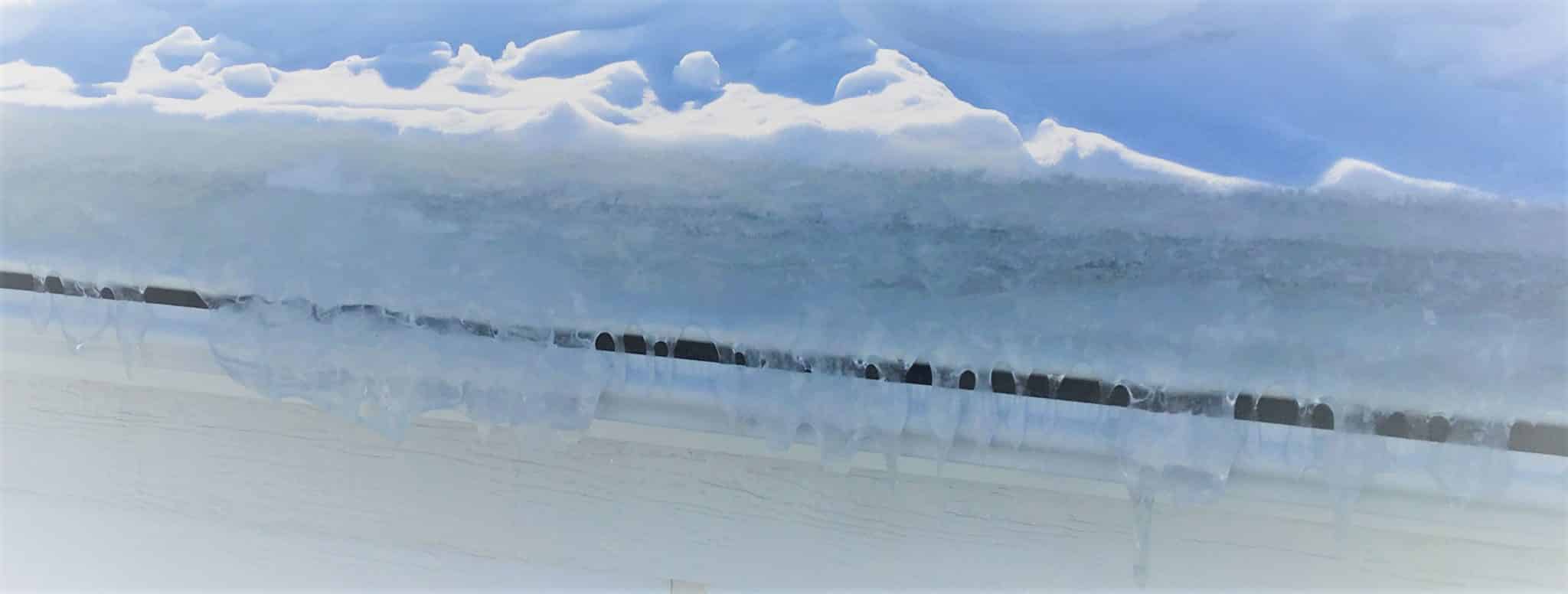
An ice dam is a layer of ice that forms near a roof’s edge and prevents melting snow from draining properly. Over time, an ice dam can cause water to back up beneath your shingles, eventually leaking into the interior of your home.
Many homeowners assume icicles always mean an ice dam has formed. That isn’t always true. Here’s how to tell the difference between icicles and ice dams — and when to take action.
Do Icicles Always Mean Ice Dams?
Like ice dams, icicles need cold temperatures, snow, and warmth to cause the snow to melt. Once the melted water comes in contact with the eave of the roof, the water again freezes. Icicles hanging from your roof can signal an ice dam. However, ice dams can be present without the existence of icicles.
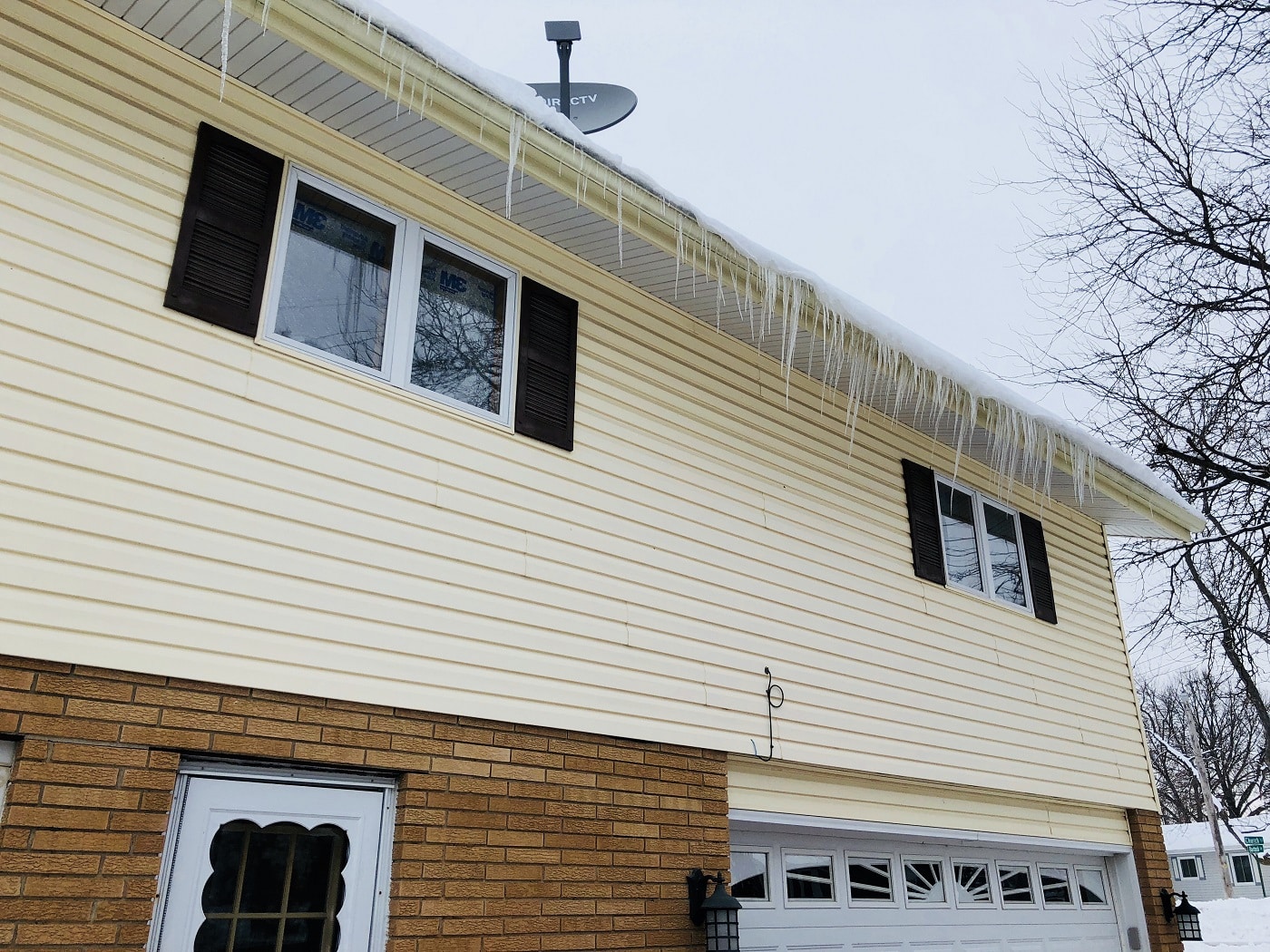
Icicles that exist only on a home’s gutters without water trapped behind them are a normal winter occurrence, not a warning sign that an ice dam has formed. While icicles can prove problematic in high traffic areas, such as walkways, they often do not pose a significant threat to the exterior, your gutters, or the layers of your roof.
Ice Dams On Your Roof
The place an ice dam forms on your roof is dependent on its style and slope. Most often, they commence growth on the roof edge and begin to back up from there.
Two of the most telltale signs that your home has an active ice dam are if moisture is present in your attic or if there are damp areas on your home’s ceilings. If either of these occurrences are happening, it means that ice damming has compromised the membrane of your home’s roof.
However, there are less obvious signs of ice dams that homeowners often miss, allowing for substantial damage to occur. If there is an abundance of snow on the ground and on a porch roof, but minimal snow on the home’s main roof, it’s a signal that heat is escaping your attic because of subpar home insulation and ventilation.
A Temporary Solution For Ice Damming
Attempting to remove an ice dam through chipping away at the ice will only damage your shingles and likely void your roof’s warranty. Using roof salt pucks will also have negative impacts on your home.
The best way to remove an ice dam is through low pressure steaming. This technique utilizes tap water and brings it to 300 degrees. A technician then uses the steamer to heat up the ice so that it is no longer affixed to the roof. However, failing to address the core issue will only result in a roof needing to be frequently steamed to remove ever-present ice dams.
A Permanent Solution For Ice Dam Prevention
The underlying cause of an ice dam is inconsistent roof temperatures. Diagnosing the core issue should be done by a reputable contractor that is able to perform diagnostic testing such as a heat map analysis, blower door testing, and FLIR imaging.
These tools allow them to create a custom plan that considers your home’s need for additional insulation, ventilation, and attic air sealing. All of these solutions can help with ice dam prevention.
Here’s What You Need to Know About Blower Door Testing:
Frequently Asked Questions About Ice Dams
What Causes Ice Dams to Form?
Ice dams form when heat escapes from the attic and melts snow on the roof. As the water runs toward the colder roof edge, it refreezes and creates a dam that prevents proper drainage.
Are Icicles Always a Sign of an Ice Dam?
No. Icicles can form naturally when melting snow refreezes at the roof edge. While they can sometimes indicate an ice dam, icicles alone do not always mean there is a roofing problem.
Can Ice Dams Cause Water Damage Inside a Home?
Yes. Ice dams can force water underneath shingles and into the home, leading to damaged ceilings, walls, insulation, and attic spaces if left unaddressed.
If ice dams keep coming back, Lindus Construction can inspect your home and help stop them for good.


